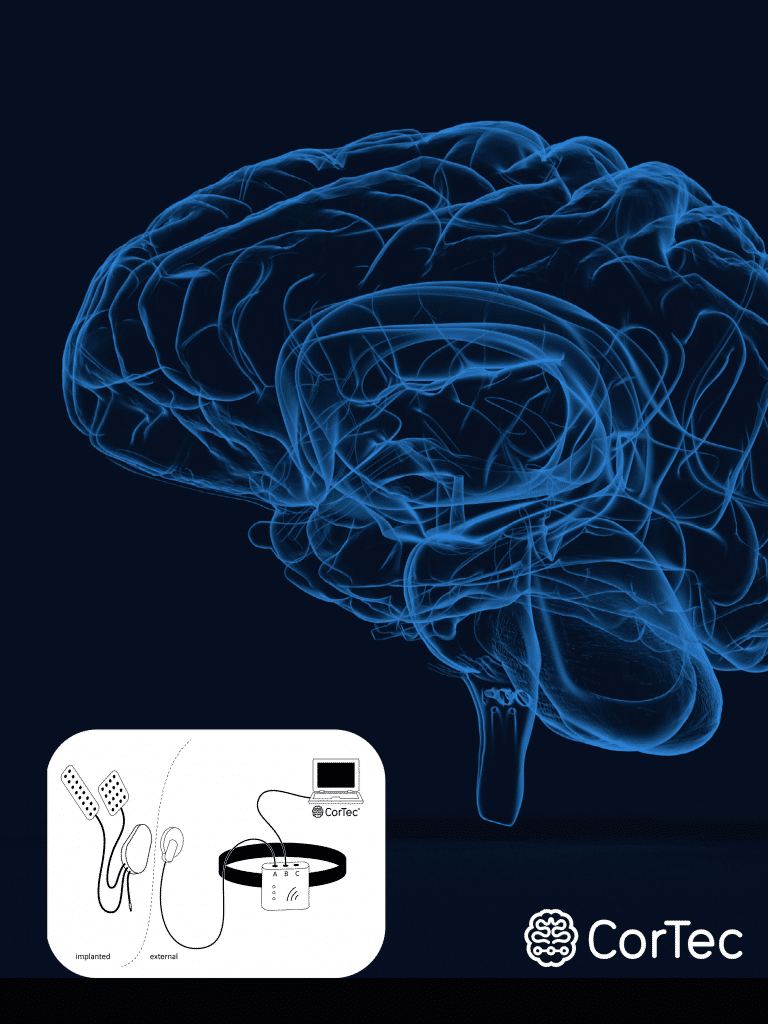
The recent publication in Nature Scientific Data by the research group around Takufumi Yanagisawa at The University of Osaka Graduate School of Medicine, marks a breakthrough for neurotechnology: long-term, high-quality electrocorticography (ECoG) data recorded wirelessly with CorTec’s fully implantable Brain Interchange ONE system.
What makes this achievement so significant? First, the BCI capability of our device. The Brain Interchange ONE is designed not only for passive data collection but for active, closed-loop applications—where neural signals are processed in real time to enable adaptive stimulation. This opens the door to advanced brain-computer interfaces for neurorehabilitation and future human augmentation.
Second, the ultra-long implantation period. The system demonstrated stable signal quality over many months without cables or restrictions on mobility. This is a critical step toward collecting chronic neural data under realistic conditions and training robust algorithms for next-generation BCIs.
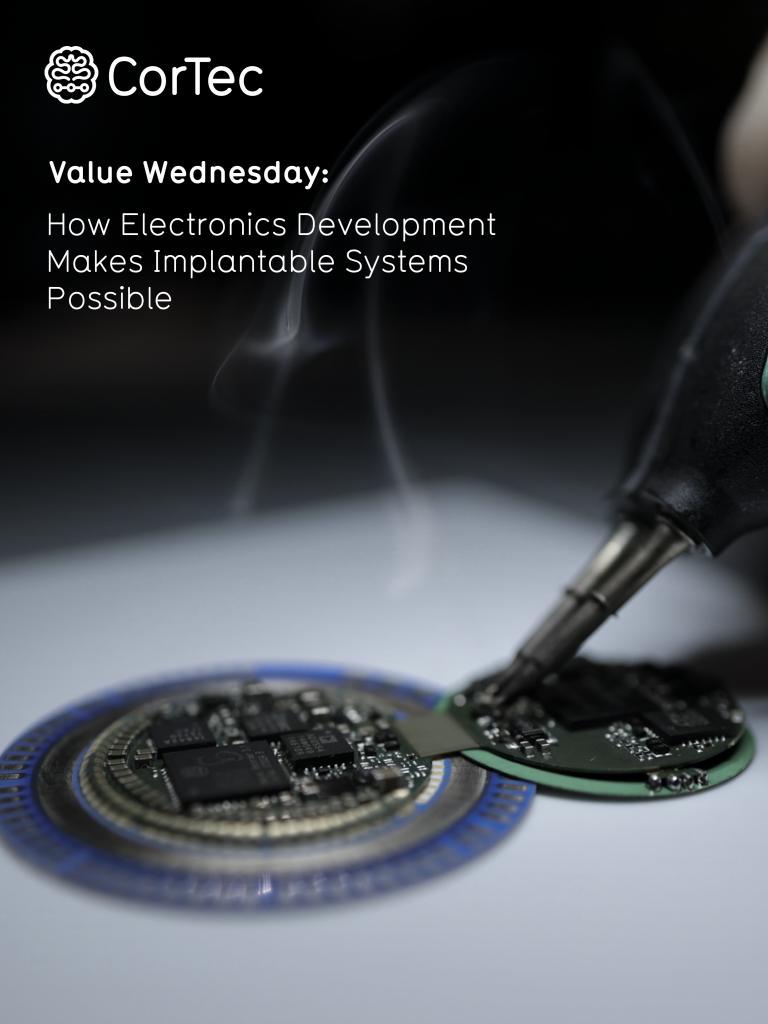
Technically, Brain Interchange ONE integrates two subdural ECoG arrays with 32 channels, a hermetically sealed electronics unit, and fully wireless power and data transmission. With a 1 kHz sampling rate and encrypted communication, it meets the highest standards for safety and data integrity—while enabling real-time processing for closed-loop neuromodulation.
The open-access dataset shared in the study accelerates global research and demonstrates that Cortec’s technology is not just a concept—it’s a proven platform for innovation in neuroscience and clinical translation.
Discover how Cortec is shaping the future of brain-computer interfaces and neurotherapeutic solutions.
Learn more about Brain Interchange System
Read the full Publication in Nature Scientific Data