University of Washington and CorTec are working together to create new hope for stroke patients.
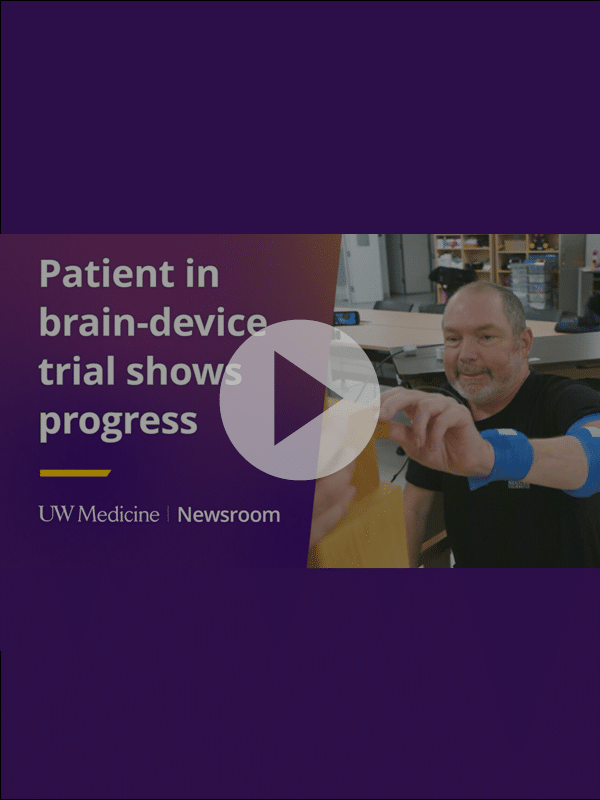
After two strokes, Matt Kidd’s left side was almost completely paralyzed. Years of therapy brought little progress, until he became part of a clinical trial at the University of Washington (UW).
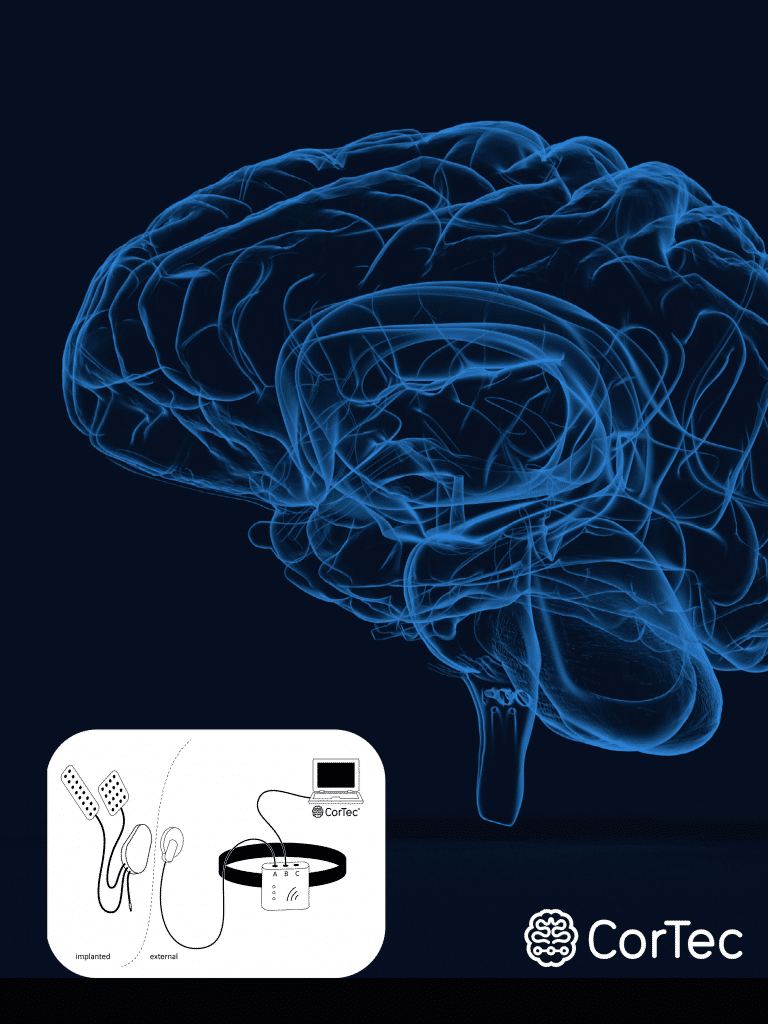
In this study, researchers are focusing on a novel brain implant developed in close collaboration with CorTec. Two thin silicone foils with electrodes were placed directly on the affected region of the brain. During rehabilitation, they emitted targeted electrical impulses designed to stimulate nerve cells to work together again and create new connections in the brain.
After just a few weeks, Matt was able to perform simple movements again – holding a cup, unscrewing a nut, closing the shower curtain. “I’m finding myself not even realizing I’m doing things [I couldn’t before],” he says.
For the doctors at UW, this progress is an encouraging sign. For CorTec, it is also proof that our technology can make a decisive contribution to opening up new perspectives for people after a stroke.
The research is still in its infancy, and more patients are being sought. But Matt’s story impressively demonstrates that when science and technology go hand in hand, dead ends can be overcome and paths back to life can be opened up.
You can read the full article here : https://newsroom.uw.edu/blog/in-brain-implant-study-patient-breaks-through-dead-end
Or watch the YouTube video: https://www.youtube.com/watch?v=P9sVMHyq3-E