The pressure on early neuro lead projects
Engineers and project managers in early-stage neuromodulation work under a consistent set of constraints: limited resources, tight timelines, and regulatory requirements that cannot be deferred. Custom electrode leads are needed quickly, but conventional manufacturing paths depend on custom tooling, long procurement cycles, and supplier relationships that take time to establish.
CorTec was built for this situation. As a development and manufacturing partner for implantable neurotechnology, CorTec takes your electrode design from print to finished custom lead within a single, integrated ecosystem.
From print to custom lead in 8 weeks
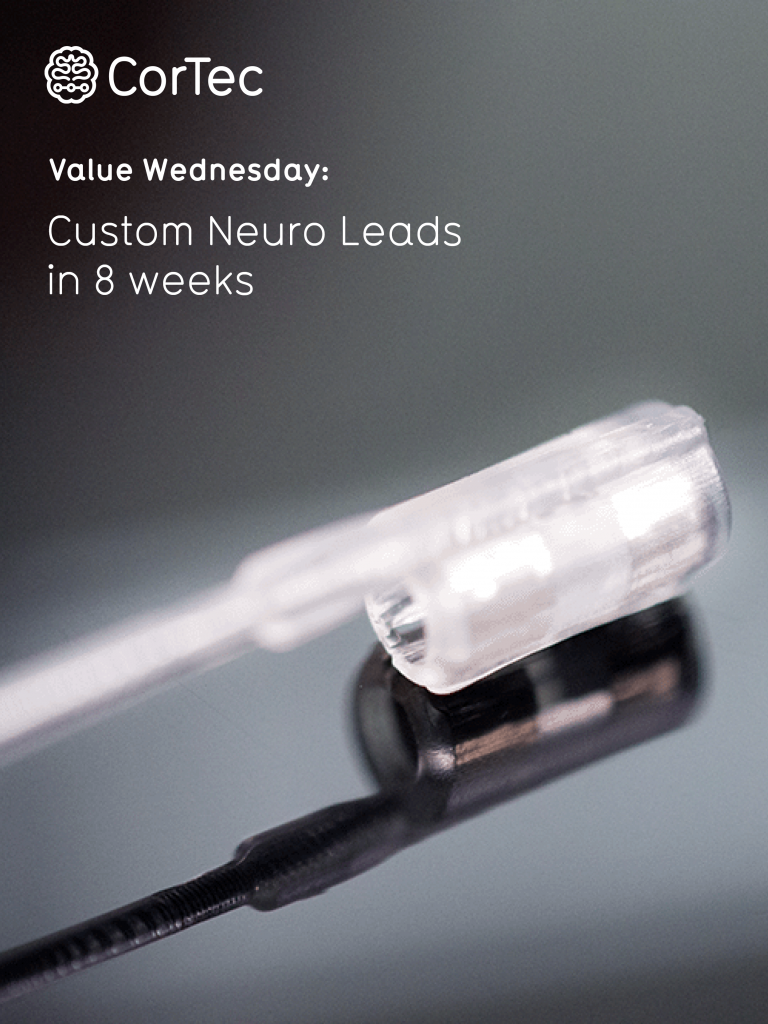
Once the design is defined, CorTec manufactures custom electrode leads for your specific application in as little as eight weeks, without requiring investment in custom tooling on your side. Teams either bring a finished design, develop a new one together with CorTec, or select from CorTec’s portfolio of standard electrode designs, which are available off the shelf or can be adapted to meet application-specific requirements.
Semi-automated laser processing enables precise, repeatable electrode geometries, maintaining consistency across production runs. Mold design and manufacturing are handled in-house, which means mechanical changes do not trigger weeks of delay or external tooling cycles. The eight-week timeline begins where your design ends.
Built on a long-standing focus on implantable neurotechnology
This manufacturing capability is grounded in CorTec’s focused expertise in implantable neurotechnology, from individual electrode components to complete active systems. The team that manufactures your lead understands the constraints of serial production and regulatory documentation, so the leads delivered are built to a standard that holds up as the program scales.
Thinking ahead: approval-ready from the start
Every manufacturing decision is a regulatory decision. CorTec approaches production with regulatory approval already in view, which means the processes, documentation, and materials used to manufacture your first lead are aligned with the requirements of future submissions from the start.
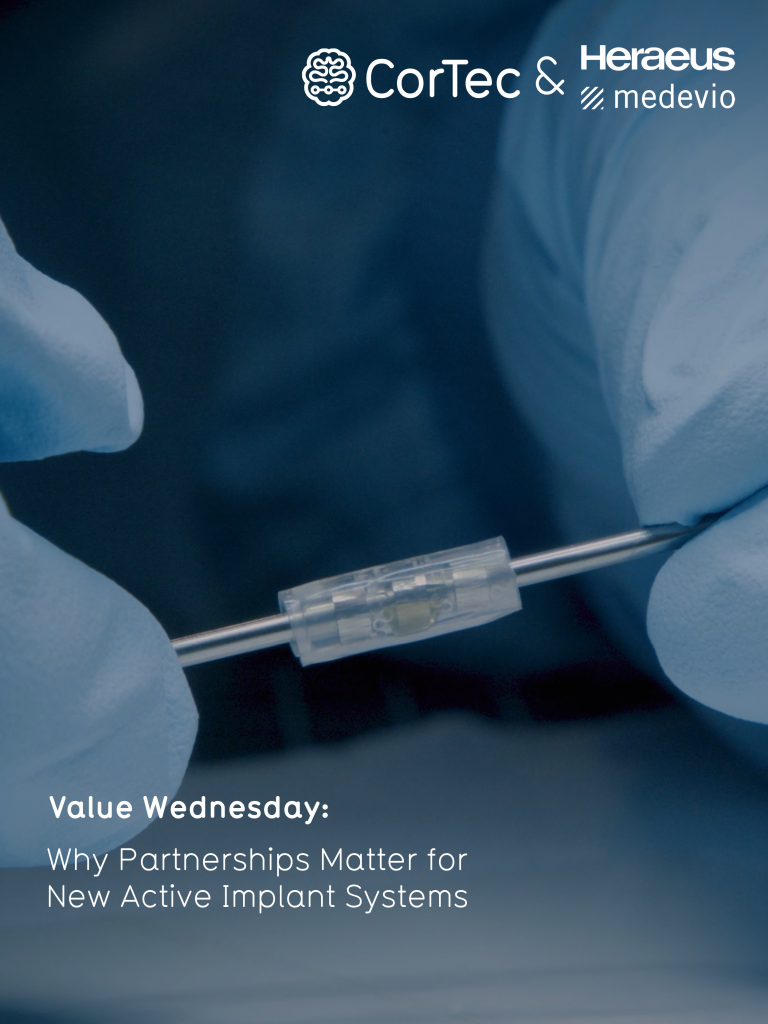
Clients can draw on validated building blocks, including electrodes, encapsulations, and interconnects designed for implantable use, that can be integrated directly into a new concept. Where it fits the application, fully validated systems such as the Brain Interchange platform can serve as the backbone of a new device, already engineered for long-term implantable use.
The result is a manufacturing path that is compatible with future regulatory submissions rather than one that requires re-work when formal compliance processes begin.
From first lead to clinical use
The same partner that delivers your first custom lead stays with your project beyond it. CorTec’s service model covers validation, design transfer, and series production of approved medical devices. Technical documentation, reliability testing, and system engineering support for regulatory submissions are part of the same engagement, not a separate workstream handled by a different team.
In practice, this reduces handovers, compresses timelines, and de-risks the transition from laboratory to first-in-human.
CorTec as the extension of your team
Building an internal team that covers all aspects of implantable neurotechnology is a significant undertaking. CorTec is structured to function as the extension of your team rather than requiring you to build that organization up front.
Under one roof in Freiburg, CorTec brings together:
- Implantable device expertise across flexible electrodes, nerve cuffs, hermetic packaging, and high-channel systems for central and peripheral nervous system applications
- Regulatory and quality know-how, developed through cleanroom development and production of implantable systems
- Pre-approved and approval-ready products, including implantable components and complete systems designed for long-term clinical use
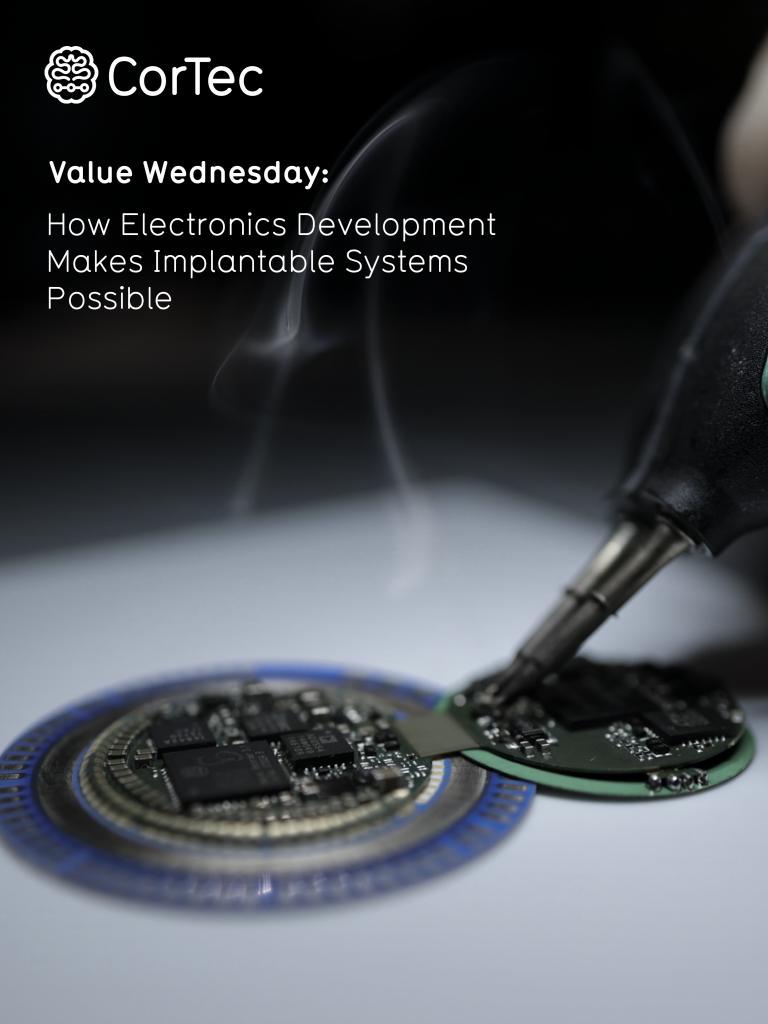
- Software and electronics for closed-loop neuromodulation and brain-computer interface applications, integrated into full hardware-software stacks
Instead of coordinating multiple vendors for electrodes, electronics, packaging, and software, you work with one partner that understands the full system and its clinical context.
Custom electrode leads in eight weeks, from a finished design or a validated standard. A manufacturing partner that stays with your project from first lead through validation, design transfer, and clinical use. That is what working with CorTec looks like in practice.