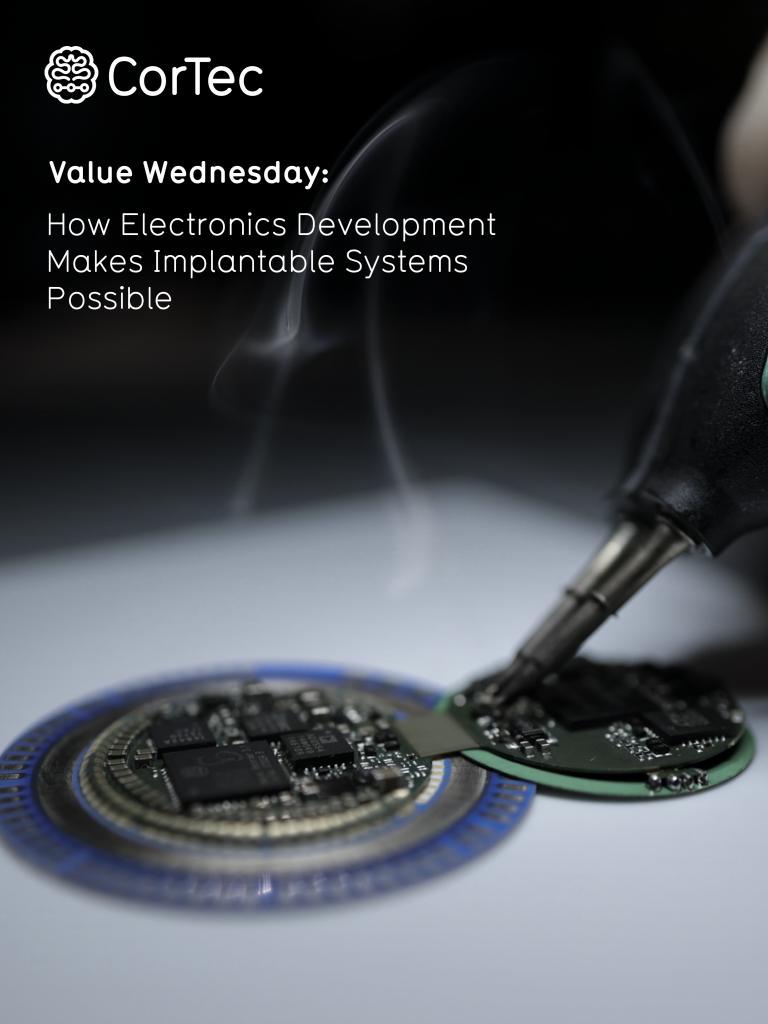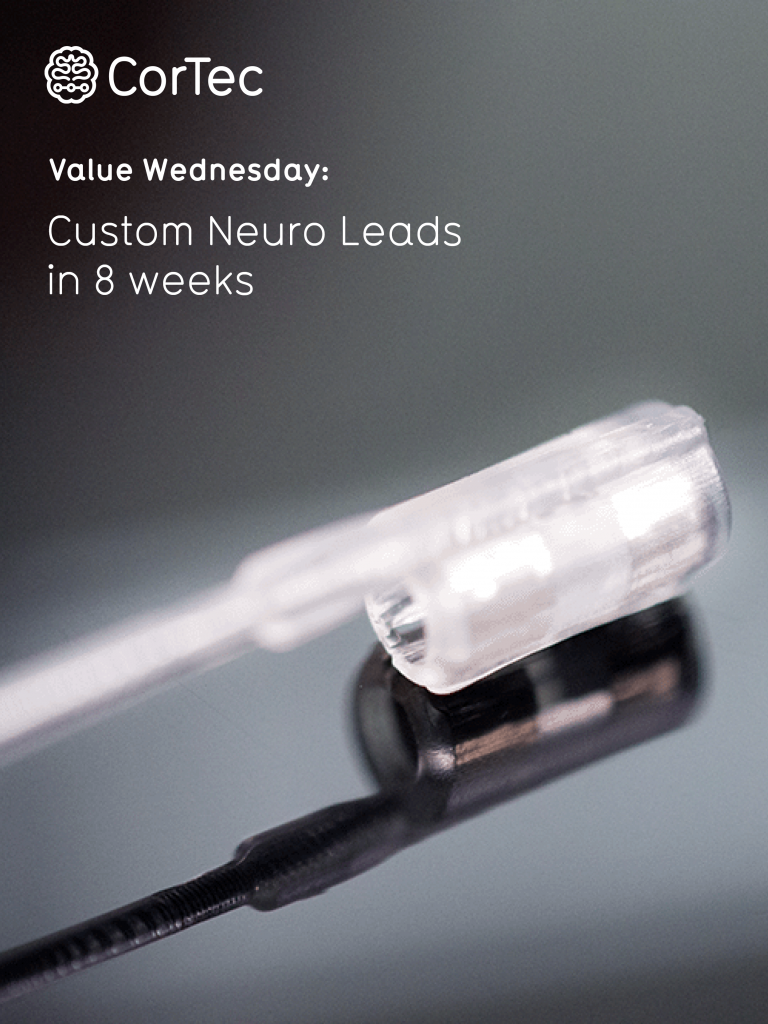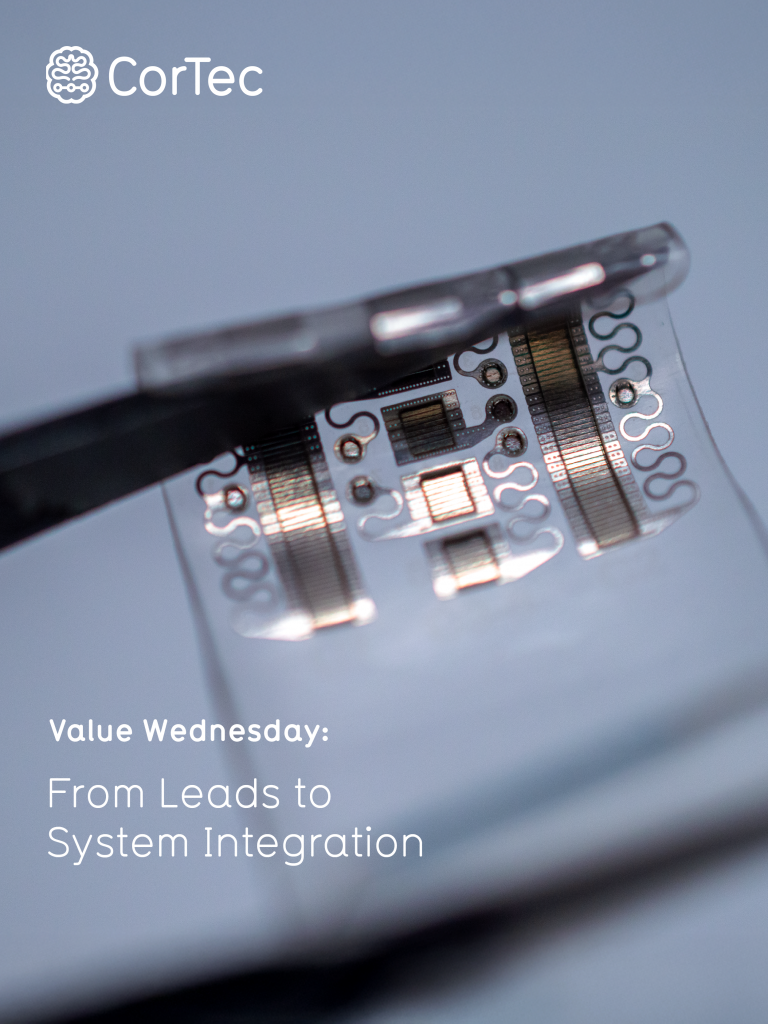
The lead is the starting point of every active implant system. Its geometry, materials, and manufacturing quality set the constraints for encapsulation, electronics, and regulatory documentation alike.
Bridging the distance between a validated lead and a complete active implant system is where most development programs slow down. It demands expertise that spans disciplines most organizations keep separate: the mechanics of implantable structures, the architecture of low-power electronics, and the software that ties it all together. Managing these dependencies well, requires a team who is able to master all required areas of expertise.
The foundation: a lead that can be trusted
The lead is the implantable interface between electronics and human body and comes in different forms, either as a cuff, grid, paddle, or percutaneous lead design. Any system integration must meet the highest standards for quality and reliability. Electrode, interconnections, hermetic encapsulations: each element is manufactured under cleanroom conditions, with tight process controls designed to prevent contamination and ensure consistency across every unit produced.
This level of manufacturing discipline is not a late-stage quality checkpoint. It is the starting point from which everything downstream follows. The geometry of a lead determines encapsulation constraints. Its material choices define the biocompatibility boundary for the entire system. Its interconnection architecture shapes the electronics design. None of this can be revisited cheaply once development moves forward.
The hidden complexity of system integration
When a lead is integrated into a complete implantable system, new challenges emerge that the lead alone does not introduce. These are not component-level problems: they are system-level problems, and they only appear when everything comes together. A mechanical decision such as encapsulation geometry or lead flexibility has direct consequences for electronics density and firmware constraints. All of this has to be managed as a system from day one, by people who understand all three disciplines.
- Biocompatibility must span every material in contact with tissue, covering not only the lead itself but every interface between it and the surrounding electronics and encapsulation.
- Power constraints reshape the entire processing architecture, forcing tradeoffs between computational capacity and battery life.
- Miniaturization creates direct conflicts between electrode count, electronics density, and encapsulation geometry.
- Wireless communication must remain reliable within a strict size and power budget, simultaneously.
None of these challenges can be solved in isolation.
Regulatory readiness is an engineering problem
A complete active implant is not just a technical system. It is a documented argument: that this device is safe, that its performance is predictable, and that it will remain so over the lifetime of the implant.
Regulatory thinking cannot begin at the submission stage. The lead is where many of the most consequential regulatory decisions are made: material selection, encapsulation approach, lead architecture. These choices determine what can be verified, what can be validated, and ultimately what can be approved. Teams that treat regulatory requirements as a downstream problem consistently face the costliest delays.
For companies building on an existing, validated platform, a significant portion of that argument is already made. Established testing data, existing Masterfiles, and documented manufacturing processes translate directly into reduced submission burden and greater predictability on the path from first clinical study to market approval.
Building on what already works
CorTec is one of the few development partners that brings mechanical, electronics, and software expertise under one roof, starting at the lead level. That is where the integration advantage becomes concrete.
Most development teams face a fragmented landscape: lead manufacturers who don’t own the electronics, electronics vendors who don’t understand encapsulation mechanics, software partners who weren’t involved in the hardware architecture. Every handoff between disciplines introduces risk, delay, and misalignment.
CorTec offers development teams a complete active implant platform built from integrated expertise: flexible lead technology, bidirectional closed-loop electronics, hermetic encapsulation, and onboard processing, designed and validated to work together because they were engineered together. Backed by an FDA Masterfile and configurable for specific clinical applications, it gives teams a credible, proven foundation: from preclinical evaluation through clinical trials and toward commercialization.
For teams working on advanced neurotech applications, that is not a shortcut. It is a significant reduction in technical and regulatory risk, and a faster, more reliable path to the patients who need these therapies.
Ready to move forward? Contact our sales team.