Built to stay. Designed for safe explantation.
A new clinical paper from the University of Washington documents, step by step, how the CorTec Brain Interchange is implanted and how it is removed. That second part answers a question the BCI field has avoided for too long: what happens when an implant is no longer needed, no longer wanted, or no longer current? Preclinical data, meanwhile, point to stable recordings over years.
Posted in Stories, on .
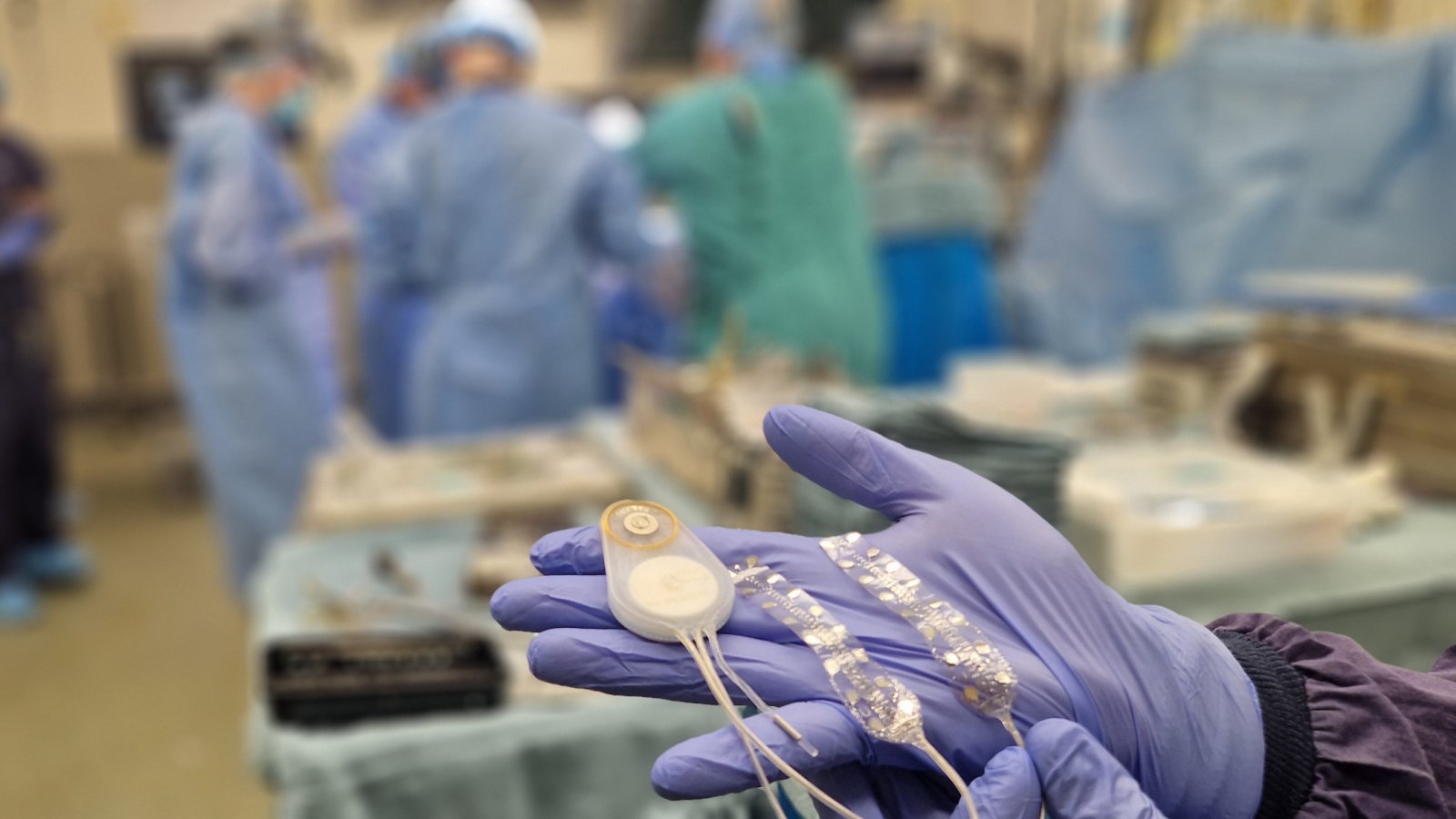
Every implant will be outdated one day. Technology advances, product lines end, studies conclude. For people who live with a device in their body, obsolescence is a practical problem, and across neurotechnology it has repeatedly left people with hardware nobody maintains anymore.
On November 10, the BCI Pioneers Coalition, a group led by people who have taken part in implanted BCI trials, published its first recommendations for the field. Among them: consent documents should set out "clear steps and timeline for device removal", participants should have time to prepare for explantation, and responsibility for their well-being "does not end with removal of the device". On obsolescence, the group is direct: "Design choices and regulatory policy should mitigate the risks of obsolescence of the hardware and abandonment of legacy software since these devices become part of people's bodies and lives."
Removal as part of the plan
A protocol paper published in Neurosurgery Practice by the University of Washington team shows what this can look like in practice. It describes an NIH-funded early feasibility study, conducted under an FDA Investigational Device Exemption, in which the Brain Interchange delivers cortical stimulation during rehabilitation for people with chronic arm and hand impairment after stroke.
The paper treats the end of implantation with the same care as the beginning:
The removal procedure is published. A surgical figure series documents the explant step by step, from reopening the site and removing the electrodes to inspecting and closing the dura and resecuring the bone flap.
Removal has a date. Devices are explanted about nine months after implantation.
Removal is followed up. Two visits, 4 and 16 weeks after explant, evaluate the safety of the procedure and the participant's final outcomes.
Removal is risk-assessed. A hazard analysis covers the explant alongside screening, implantation and stimulation. The authors state the surgical risks openly and consider them comparable to or lower than those of the implant procedure.
This is no longer only a plan on paper. As CorTec reported in October, the complete system remained implanted for nine months in the first participant and was then safely removed as scheduled.
In this study, removal is planned for every participant: the device is investigational, it is used to support a defined period of rehabilitation, and it is not MRI compatible. The therapeutic logic leads to the same conclusion. In stroke rehabilitation, the goal is for the device to become unnecessary.
Design features that limit obsolescence
Three properties of the Brain Interchange work against obsolescence:
The intelligence sits outside the body. The implant records and stimulates; the software that interprets signals and decides how to respond runs on an external computer. Algorithms can improve without surgery, and implant firmware can be updated wirelessly.
There is no battery to wear out. The implant is powered wirelessly through the skin, so no replacement surgery is needed because of a weak battery.
The way out is documented. A published removal procedure is the precondition for moving to a newer generation. Exchanging an implant was not part of this study.
"An implant should never be a one-way decision," says [Name], [Title] of CorTec. "People should know before surgery how the device comes out again, whether because therapy is complete, because they no longer want it, or because something better exists."
Removal is an option, not a necessity
Removability matters most when it is a choice rather than a consequence of failure. In a recent paper in the Journal of Neural Engineering, a team led by Mayo Clinic reports stable chronic recordings with the Brain Interchange in a preclinical study, with the longest implantation exceeding three years. Separately, peer-reviewed data presented at the Graz BCI Conference show CorTec electrode arrays recording stable signals for more than four years in non-human primates.
A benchmark for the field
We read the Pioneers' recommendations as a benchmark. A published removal procedure with scheduled follow-up answers part of it. Other parts, such as participants' say in how a trial ends and long-term support for devices that keep helping, remain work for the whole field, including us.
The paper
Herron JA, et al. Single center, single-group trial to evaluate the safety and feasibility of 50 Hz stimulation to enhance stroke recovery of upper limb function: the Motor Recovery Through Plasticity-Inducing Cortical Stimulation open-loop protocol. Neurosurgery Practice 7(6), December 2026. https://doi.org/10.1227/neuprac.0000000000000323
Further sources
BCI Pioneers Coalition. OUR BCI: Recommendations for ethical implanted BCI research, version 1.0, November 10, 2026. https://bcipioneers.org
Lampert F, et al. Journal of Neural Engineering (accepted manuscript, 2026). https://doi.org/10.1088/1741-2552/aec198
Gkogkidis CA, et al. Proceedings of the 10th Graz Brain-Computer Interface Conference 2026, 547. doi:10.3217/978-3-99161-093-9-094
The Brain Interchange System is an investigational device and is not approved for commercial use. The clinical result described is from a single study participant. CAUTION: Investigational device. Limited by Federal (or United States) law to investigational use. The long-term results cited come from preclinical studies.