The common antihistaminic substance famotidine was found to be helpful in some COVID patients in this situation. But how exactly the drug (which is usually used to treat stomach problems) exerts its function in COVID was unclear, so it hasn’t been widely used in this case yet. The group of Kevin Tracey at the Feinstein Institute of Bioelectronic Medicine has now found an unexpected explanation for how the drug attenuates cytokine storm: Through a neural reflex.
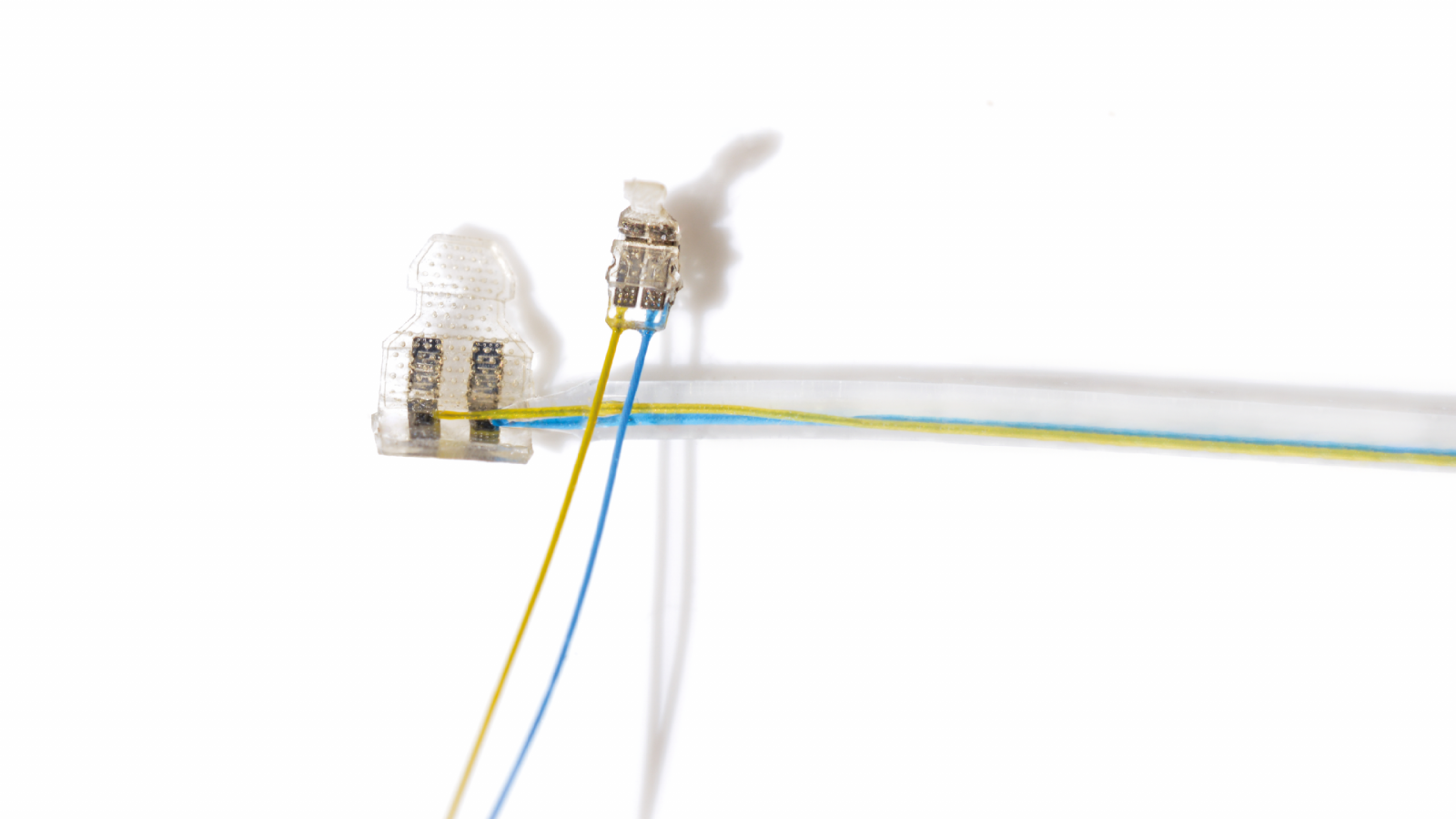
Two hints brought the group to their rather unconventional hypothesis: First, rather high doses of famotidine are needed to be efficient in COVID. Second, famotidine does not easily pass the blood brain barrier. In a mouse model, the authors indeed found that injections of the drug into the brain were much more efficient than into the body. Equipped with CorTec’s cuff electrodes, the group found that it was the Vagus nerve, originating in the brain stem, in which famotidine increased the neural activity. The nerve was already known to exert an anti-inflammatory reflex that helps to keep inflammations at bay. To test whether the reflex also constitutes the sought-for mechanism of action of famotidine, the authors experimentally severed the Vagus nerve before administering the drug. Indeed, without the nerve, famotidine could no longer ameliorate the inflammation.
With their research, the group seems to have uncovered a previously unknown Vagus nerve dependent anti-inflammatory pathway that mediates famotidine’s action in cytokine storm. This is an interesting demonstration of how bioelectronic probes can be instrumental in basic biomedical research above and beyond neuromodulation.
Learn more about Applications with Cuff Electrodes.
Citation:
Yang H, George SJ, Thompson DA, Silverman HA, Tsaava T, Tynan A, Pavlov VA, Chang EH, Andersson U, Brines M, Chavan SS, Tracey KJ. Famotidine activates the vagus nerve inflammatory reflex to attenuate cytokine storm. Mol Med. 2022 May 16;28(1):57. doi: 10.1186/s10020-022-00483-8. PMID: 35578169; PMCID: PMC9109205.