CorTec Brain Interface Electrodes Record Stable Signals for More Than Four Years
Peer-Reviewed Four-Year Data Confirm the Durability of the Electrode Platform Behind Brain Interchange™
Posted in Press Releases, on .
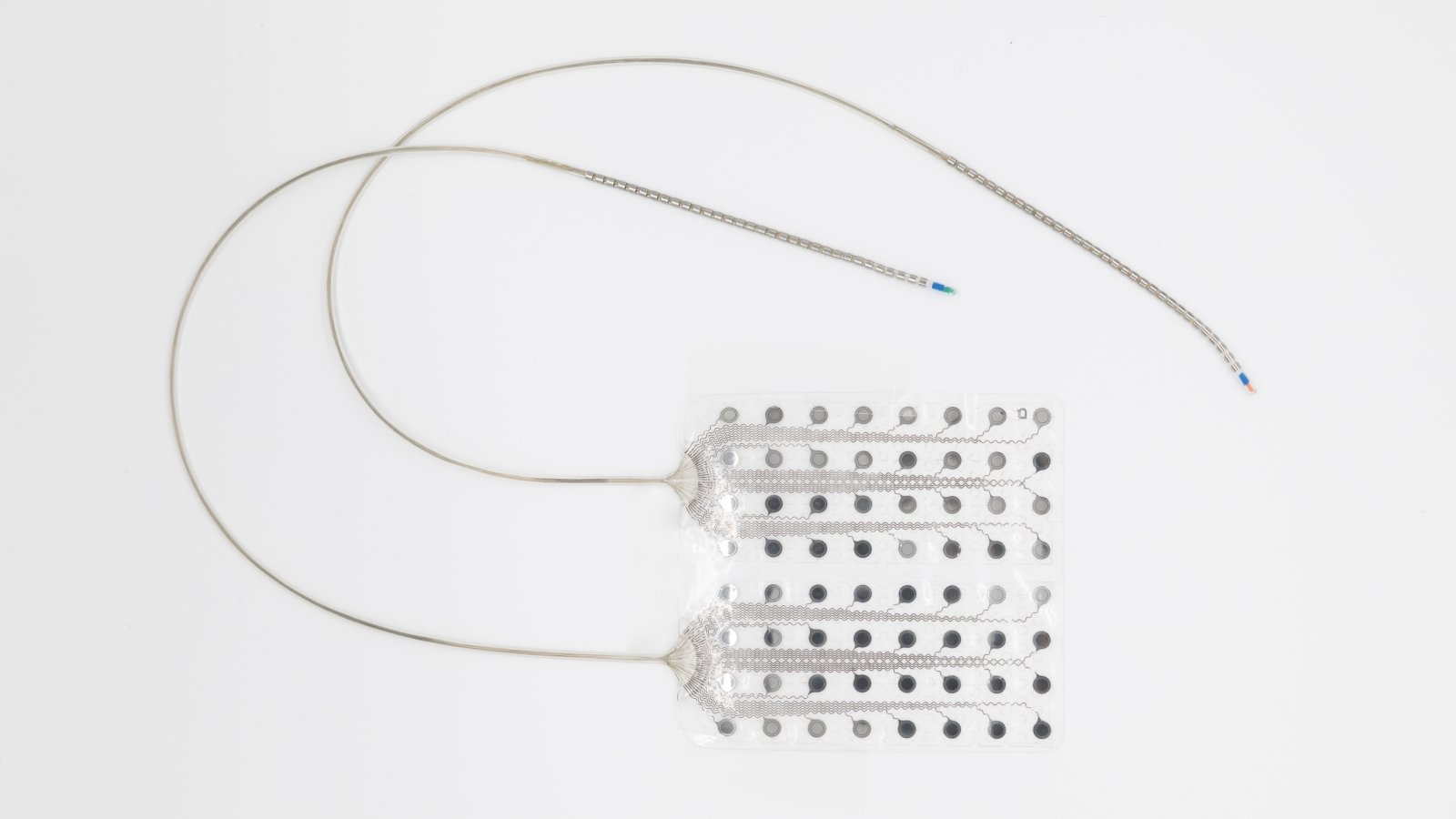
Every brain implant faces the same quiet question: will it still work next year? For a patient, the answer decides whether an implant is a one-time decision or a recurring surgery. New peer-reviewed data now answer that question for our cortical surface electrodes over more than four years. In two non-human primates implanted at Weill Cornell Medicine in New York, our micro-ECoG arrays — manufactured in our Freiburg cleanrooms — kept delivering meaningful neural signals throughout. In the animal still under study, 63 of 64 contacts continue to record more than four years after implantation.
The results, presented at and published in the Proceedings of the 10th Graz Brain-Computer Interface Conference in September 2026, show more than long-term material stability. Spatial and spectral neural signal characteristics remained stable across recordings compared up to day 1,361, and the arrays reliably recorded activity showing clearly distinguishable patterns between an alert, task-engaged brain state and a drowsy state — exactly the kind of difference a decoder relies on. Across both animals, a single contact stopped working, after about 14 months. No further contact has failed since.
Durability is what connects this study to the clinic. The arrays rest on the dura and never enter brain tissue, and they are built from the same medical-grade silicone and platinum-iridium, with the same methods, as the electrodes of Brain Interchange. The evidence now spans three levels: more than four years for the electrode arrays, more than 500 days for the complete wireless system in non-human primates, and nine months of planned implantation in the first participant of the NIH-funded stroke study at the University of Washington — followed by a safe explantation per protocol.
"Durability decides whether a brain implant becomes a therapy," says our CEO Dr. Frank Desiere. Four years of stable signals suggest the non-penetrating approach holds up over time — a prerequisite for a BCI that is meant to serve people for years, not months.
Media support
MC Services AG — Katja Arnold, Dr. Johanna Kobler, Kaja Skorka
cortec@mc-services.eu
+49 (0)89 210 228-0
Tagged